Product Description
Specification of Nylon Mos2 Rods
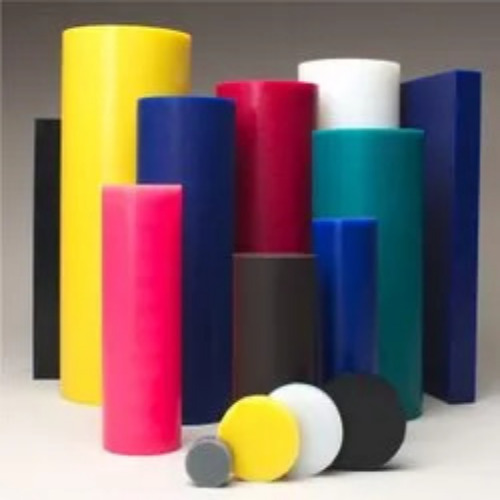
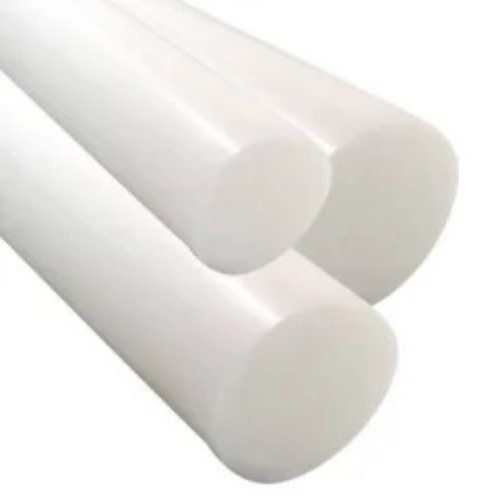
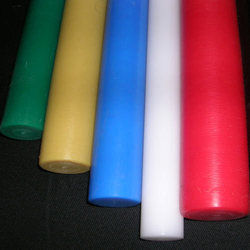
Nylon MoS2 Rods that are widely used in different industries owing to its enhance sliding (wear) and self - lubricating properties.
- Excellent sliding frictional properties
- Abrasion resistant
- Stick or slip performance
- First authentic lubricated nylon
- Improved wear and abrasion resistance
- Improved PV characteristics
- Blended liquid lubricant system
- Improved coefficient of friction and stick or slip characteristics
- Consistent wear performance throughout product life
- Reduced water absorption
- Excellent mechanical, thermal and chemical resistance properties
- Good dimensional stability.
Engineered Durability for Demanding ApplicationsNylon MoS2 rods combine the toughness of nylon with the lubricating properties of molybdenum disulfide. These rods are designed to perform under heavy loads and harsh operational environments, offering enhanced impact strength, reduced wear, and reliable performance in high-stress conditions. Their structural integrity and low friction are ideal for machinery parts like bearings, bushings, and gears.
Precision Machining and Versatile CustomizationWith excellent machinability, Nylon MoS2 rods can be easily cut and shaped to meet specific engineering requirements. Standard and custom dimensions, ranging from 10 mm to over 300 mm in diameter, allow seamless integration into various machines. These rods maintain tight tolerances and dimensional stability, ensuring reliability in precision engineering tasks.
Chemical and Thermal ReliabilityNylon MoS2 rods resist most common industrial oils, greases, and chemicals. Their low water absorption and thermal stability across a broad range make them suitable for challenging operating conditions. Superior hardness and compressive strength deliver longevity, while good dielectric properties enable use in electrically sensitive components.
FAQ's of Nylon Mos2 Rods:
Q: How are Nylon MoS2 rods used in industrial machinery?
A: Nylon MoS2 rods are frequently machined into bushings, gears, rollers, and bearings for industrial equipment. Their enhanced wear resistance, low friction, and high compressive strength make them suitable for heavy-duty and precision applications requiring reliable, long-lasting components.
Q: What benefits does molybdenum disulfide (MoS2) add to these nylon rods?
A: MoS2 significantly lowers the coefficient of friction, reducing wear and increasing the lifespan of the rod. It also contributes to improved impact strength and better dimensional stability compared to standard nylon, enabling smoother operation in demanding environments.
Q: Where can Nylon MoS2 rods be installed or used?
A: These rods are widely installed in precision engineering industries, automotive plants, textile machinery, and other sectors that require durable, wear-resistant parts. Their compatibility with universal machines and ability to be machined or press-fit make them adaptable to diverse engineering settings.
Q: What are the advantages of using Nylon MoS2 rods over standard nylon rods?
A: Nylon MoS2 rods offer reduced water absorption, higher tensile and impact strength, improved wear resistance, and enhanced compressive strength. These qualities make them more reliable for continuous or heavy-duty operations where standard nylon might underperform.
Q: How is the installation process carried out for Nylon MoS2 rods?
A: Installation typically involves machining the rods to the desired size and shape, followed by either press-fitting or mounting into the assembly. Their excellent machinability allows for precise fabrication and a straightforward integration process.
Q: What is the recommended operating temperature range for Nylon MoS2 rods?
A: Nylon MoS2 rods are engineered to operate between -40C and +120C for continuous use, with short-term resistance up to 160C. This ensures performance reliability in both low and high temperature environments.
Q: When is it beneficial to choose Nylon MoS2 rods for an application?
A: Choosing Nylon MoS2 rods is most beneficial when components must withstand high loads, reduced friction, frequent impact, and exposure to oils or chemicals. Their properties are ideal for extending part life and minimizing maintenance in industrial systems.







 Send Inquiry
 Send Inquiry
 Send SMS
 Call Me Free
