Product Description
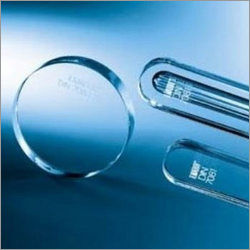
Reflex Glasses
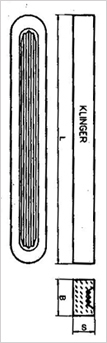
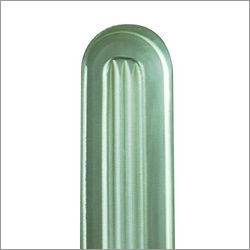
KLINGER reflex glasses are provided with moulded prismatic grooves on the side in contact with the medium. As a result of the difference in refractive index, light rays entering the gauge from outside are reflected or absorbed.
The light ray entering the steam or gas space strikes the groove face at an angle of 45o, being thereby refracted into the opposite groove face from which it is reflected back in direction of observation. The steam or gas space thereby appears silver-white. The liquid space behind the reflex glass appears black.
This eliminates any possibility of errors in reading the liquid level.
KLINGER reflex glasses are recommended for use within the limits shown in the pressure and temperature table.
|
Klinger Glass Type
|
Type A
|
Type B
|
Type H
|
|
Application Reflex Glasses
|
bar
|
C
|
bar
|
C
|
bar
|
C
|
|
For media which do not significantly affect the glass e.g. oils and hydrocarbons
|
220
|
120
|
265
|
120
|
300
|
120
|
|
150
|
400
|
180
|
400
|
200
|
400
|
|
0-10
|
430
|
0-10
|
430
|
0-10
|
430
|
|
For media which seriously attack the glass e.g. saturated steam, HPWH, alkalis
|
35
|
243
|
35
|
243
|
42
|
253
|
For steam pressures above 35 bar we recommend the use of mica-protected transparent glasses.
|
Application range of KLINGER Glasses
|
|
The values for gauge pressure and temperature shown in the table are maxima. At working temperatures above 300oC the glass beings to suffer stress relief (a release note for material data is only issued for temperatures to 300oC) In this temperature range care should be taken to prevent shock-effects on the glass during service.
KLINGER reflex glasses are suitable for all technically practicable below-zero temperatures.
A dismantled glass should not be re-used.
KLINGER glasses are suitable for use in liquid level gauges of nearly all makes.
|
Robust and Adaptable ConstructionDesigned to meet a range of industrial requirements, Klinger Reflex Glasses feature borosilicate glass and a mild steel or stainless steel case. The flexibility of end connections (BSP, NPT, or flanged) and choice of mounting orientation allows users to tailor the product for specific installation needs. The powder-coated or electro-polished finish provides a sleek, corrosion-resistant exterior.
Reliable Performance and Clear DisplayWith their high-clarity reflex glass, these gauges deliver exceptionally accurate visual readings. They are built to withstand operating conditions up to 400C and 35 bar pressure, offering safe and consistent monitoring of liquid levels. The PTFE, CAF, or graphite gaskets ensure reliable sealing under various industrial settings.
Ease of Maintenance and CustomizationMaintaining Klinger Reflex Glasses is effortless, thanks to their easy glass replacement design. Users can also select customized measuring ranges and glass sizes as required for specific applications. This adaptability, combined with reliable sealing and construction, makes them an optimal choice for ongoing industrial operations.
FAQ's of Klinger Reflex Glasses :
Q: How do Klinger Reflex Glasses facilitate liquid level measurement in tanks and vessels?
A: Klinger Reflex Glasses use borosilicate reflex glass to provide a clear, high-contrast display of liquid levels, making visual monitoring quick and accurate. The glass design enhances visibility, allowing operators to easily discern liquid positions in tanks and vessels.
Q: What are the available end connection options for these reflex glasses?
A: They can be supplied with threaded (BSP/NPT) or flanged end connections, accommodating various installation requirements across industrial settings.
Q: When should the glass be replaced, and how is maintenance handled?
A: The glass should be inspected regularly for signs of wear or damage. Thanks to the easy glass replacement design, maintenance is simple and can be performed on-site without specialized tools, minimizing system downtime.
Q: Where can Klinger Reflex Glasses be installed within an industrial system?
A: These reflex glasses are designed for vertical mounting on tanks or vessels and can be installed along pipelines or sight windows where liquid level monitoring is essential. Their robust construction allows use in various environments.
Q: What materials are used for the gasket and sealing components?
A: Depending on application needs, gasket and seal materials include PTFE, CAF, graphite, or a combination, ensuring optimal sealing performance and chemical compatibility even at high temperatures and pressures.
Q: How does the product benefit industrial operations?
A: Klinger Reflex Glasses enhance safety and efficiency by providing accurate, easily visible liquid level readings at a glance. Their durable construction and simple maintenance reduce downtime and upkeep costs.






 Send Inquiry
 Send Inquiry
 Send SMS
 Call Me Free
